


The World of Zines: History, Creativity & Self-Publishing
Learn all about the significance, history, and production of zines here. Dive into their history; you’ll be surprised at the role this medium has played.
Understanding Zines: The Basics
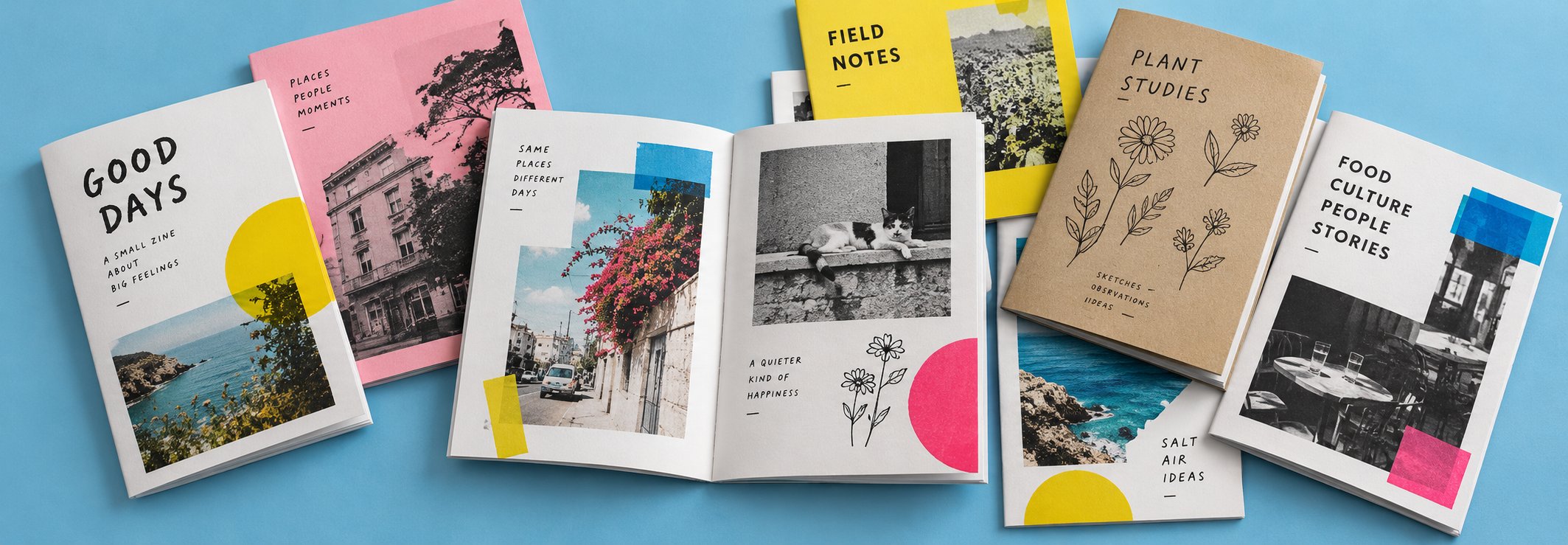
A zine is a printed communication medium distributed within a group, fan community, or subculture. It is independent of publishers and clients and serves primarily to convey information. Ideology and passion outside the mainstream media are the driving forces behind creating this powerful means of communication. Learn more about the role zines have played in the past and the possibilities offered by today’s printing technology.
What is a Zine?
A zine is a self-published magazine or booklet on a topic of the creator’s choosing, usually produced in small print runs. It stands out for its clearly visible do-it-yourself character and the palpable passion for the chosen topic. Topics like music, art, poetry, films, and even political messages frequently appear in zines. A self-created zine is the ideal print medium for preserving memories, recording thoughts, or connecting with like-minded people or fellow advocates through distribution.
Definition
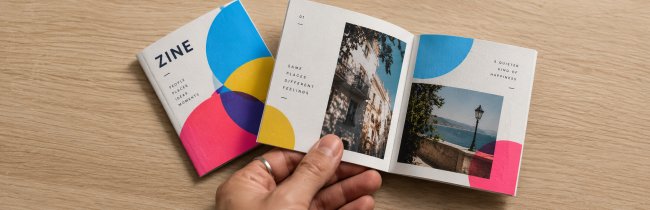
The term “zine” is derived from “fan[maga]zine” and refers to a self-published magazine or booklet, usually in a small print run. In the past, these were often produced using photocopiers or home printers; this DIY form of communication does not claim to being professional - it thrives on the individuality and personal expressiveness of the texts, illustrations, photos, or comics it contains.
The History of Zine Culture
The history of zines now stretches back over 100 years. Science fiction fans in the 1930s were likely the first to create zines to share their stories and ideas. Enthusiasts produced homemade zines to share cultural history, art, or political views with one another. One of the oldest zine publications dates back to 1917, beginning with the first issue of *The Messengers*, which focused on Black politics and creative culture. This readership later gave rise to the Harlem Renaissance.
In the 1960s, zines became an important medium for the underground press, particularly in the punk scene, and gained significant prominence among those who rejected mainstream norms. In the 1970s, zines were also increasingly used by feminist and queer activists. Beginning in the 1990s, zines reached a peak in popularity when the Riot Grrrl movement and the grunge scene used them as a medium for their music, art, and political messages. Today, zines offer a way - alongside digital blogs - to bring issues to light and give authors a voice, with the primary goal of fostering a sense of community.
Zine - isn’t it basically just a magazine?
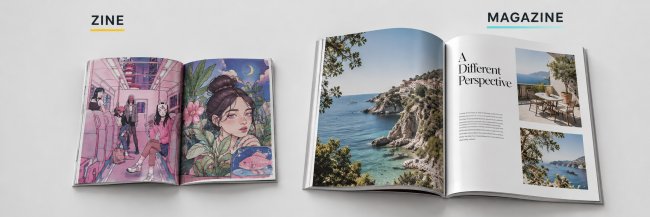
Actually, no. Magazines are usually produced by large companies with the goal of increasing long-term revenue, while zines are typically produced by independent groups or nonprofit organizations to increase visibility or find new supporters. They are usually produced in small print runs, typically between 10 and 100 copies. Magazines, on the other hand, aim for a larger print run, especially since they are financed by advertisements, and the cost per ad is based on the number of copies printed.
Furthermore, unlike magazines, zines do not adhere to a strict publication schedule. They may consist of individual projects or series, but they are published only when the author feels inspired and wants to share new content. This is the idea behind the zine, and the flexibility it offers allows creators to experiment with different topics or shed light on current issues without feeling commercial pressure.
"I can write anything and just put it in a zine, and then it's out there. It is like blogging but on paper. It is what I started to do before the computers were all popular." - Mark Gonzales
Characteristics of Zines
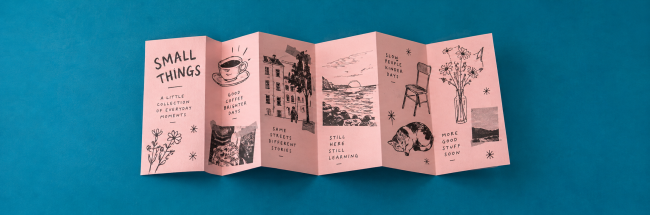
When producing a zine, the specifications chosen are usually such that the zine is small, handy, and lightweight. They are printed in black-and-white or in up to four colors, and their visual and tactile qualities differ from the glossy finish of commercial publications.
In terms of content, zines are characterized by their thematic diversity, including niche and controversial topics that commercial media cannot or will not cover. This makes zines a valuable medium for alternative viewpoints and underground movements.
Real-World Examples
Art zines serve as mobile galleries for artists, showcasing artwork, photographs, and illustrations. They may be organized around a specific theme or concept, or they may present a collection of an artist’s current works. An art zine is an ideal medium for giving readers insight into the artist’s vision or creative process.
Political zines are aimed at like-minded people and offer alternative perspectives and questions regarding current events; they raise political awareness and inspire people to take action. They are a good medium for detailed background information, interviews, and information on how to get more involved. Historically, political zines have always played an important role in social movements; they offer their publishers an excellent platform for spreading their ideas and mobilizing further support.
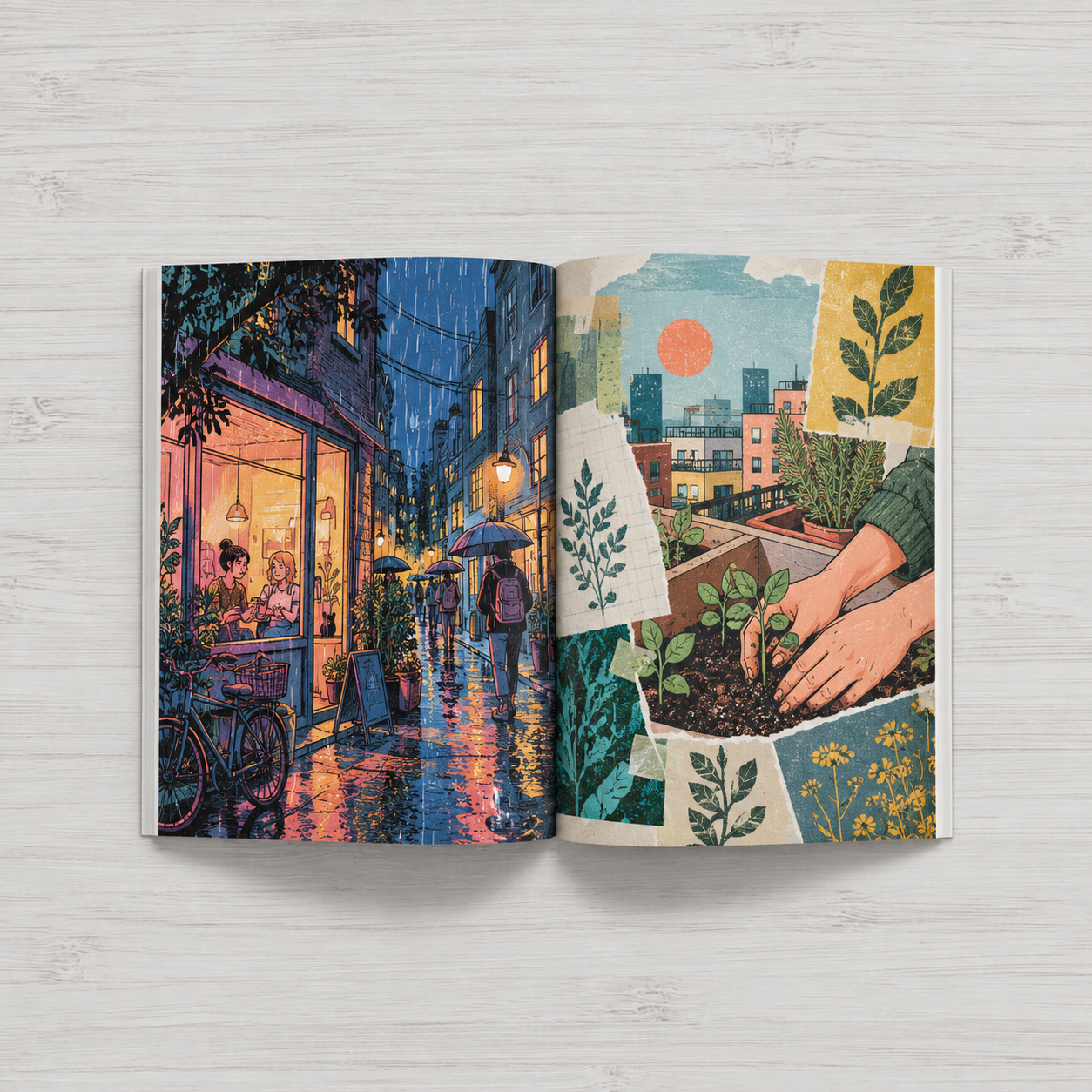
Personal zines, also known as perzines, are autobiographical works in which the editors share personal stories and experiences on a specific topic with their interested readers. The variety of topics is just as diverse as the stories that life writes. Mental health, relationships, everyday challenges, and even personal travel experiences offer deep insights into the editor’s world. Perzines usually read like diary entries, providing an honest basis that fosters a strong connection with readers.
Music zines focus on everything the world of music has to offer. Bands and genres, legendary concerts or festivals, discussions about music culture - these are all topics covered through background articles, interviews, and musician profiles. You’ll also find reviews of new albums, concert reviews, and analyses of song lyrics here. Historically, music zines have played a significant role in the development of various subcultures such as punk, metal, indie, and hip-hop.
Literary zines are an ideal medium for emerging authors, poets, and thinkers, allowing them to avoid exposure to publishers’ criticism of their content and language before their work is even published. They offer an interested readership a portfolio of poetry, short stories, or even purely academic works, with writing styles ranging from conventional to avant-garde and experimental. Literary zines were often the first publications of well-known authors.
Comic zines tell their stories primarily through images, drawings, and illustrations. They are an ideal medium for young illustrators and comic artists who want to introduce their work and narrative style to a wider readership. Comic zines captivate with a diversity of visual language and expressiveness - ranging from humorous to dark, they cover the entire spectrum.
The Influence of Zines
In the past, print culture was strongly influenced by zines, and even today, zines continue to find their readership. Their influence on mainstream media is undeniable and continues to inspire a new generation of authors.
Zines as a Means of Building Solidarity
Well-crafted zines, especially when published as a series, forge close ties between authors and their readership. This connection is built primarily through shared interests and personal values, but also through public gatherings at trade shows or zine festivals. Here, authors and readers come together, topics take shape, and the shared exchange fosters a sense of belonging.
The Influence of Zines on Mainstream Media
Mainstream media have repeatedly evolved or established entirely new formats - in terms of subject matter, language, and the overall presentation of their magazines - as a result of the influence of popular zines. This is clearly evident in the diversity of specialized magazines that, in recent years, have sought to attract readers by focusing more closely on specific topics. However, the influence of zines extends beyond the media landscape. Traces of the mindset and graphic aesthetics of zine culture can be found time and again in contemporary art, fashion, and graphic design.
Create Your Own Zine
Who has what it takes?
The answer is clear: Anyone can create a zine. You don’t need professional equipment or special training - just a good idea and the desire to share it with others. The production process itself is simple; the execution is straightforward, and the logistics can be tailored to your needs. Low production costs make it much easier to experiment and take risks.
How to make a Zine?
Tools and Materials
Paper: There are various paper weights and types available, ranging from standard printing paper to specialized art paper. The choice of paper can influence the feel and appearance of your zine, so experiment with different options to see what works best for your project. If you’re printing in color, consider how the colors will look on different types of paper.
Pens, markers, and other art supplies: Use the pens and materials you’re comfortable working with creatively - like drawing, writing, or adding creative touches beyond the content. Colored pencils and markers of all kinds work well here, as do stamps and stickers, which add a special touch to your zine.
Scissors, glue, and more: Ideal for cut-and-paste layouts and for incorporating individual elements into your pages.
Tips and Tricks for Getting Started with Your Zine
1. It all starts with an idea
Choose your theme and begin by jotting down some key points about the content. Use this as a basis to plan the page flow, sketch out the content, and consider the message you want to convey and your target audience. This planning phase helps ensure your zine has a cohesive flow.
2. Choose a basic layout
This includes format and size, typography, color scheme, and page layout. You can either be strict about it for every page or flexible and open to experimentation. This medium has no set rules… anything goes; nothing is mandatory. The most important requirement is to create a reading experience and establish a connection with your audience. Let your thoughts flow onto the pages...
3. Production
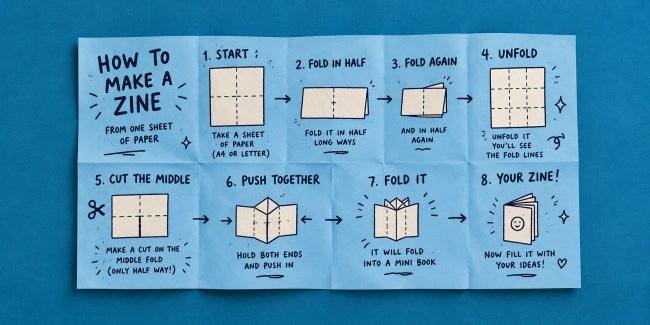
Arrange the pages in proper order before printing. It’s advisable to do a few test prints on cheap paper to ensure everything aligns correctly. After printing, fold the pages and, if creating a multi-page zine, staple them along the center fold. This easy binding technique is called saddle stitch binding. For alternative methods, see our guide to various binding types. And if you want to learn more about common comic book sizes, check this out.
Can You Make Money with Zines?

For most zine creators, it all starts with a passion for and commitment to an idea. However, once the zine is established, the loyal fan base has grown, and there’s a clear desire for it to continue, copies can certainly be offered for sale at trade shows and in local stores. Another approach is to reach out to companies whose interests align with the zine’s theme. These companies could provide financial support for the project in exchange for a mention or an advertisement within the zine.
If you want your zine to look professional or if the print run eventually becomes too much for you to handle on your own, we offer professional printing solutions for zine production. Just check out our website - you’ll find a wide range of paper options and production possibilities.
Here’s How to Move Forward
Online communities and forums
Don’t work alone - join an online zine community instead. There, you’ll find like-minded people who can support you with practical suggestions to help you develop your work further. You can share your work and receive responses and helpful feedback. Use these forums for thorough research and in-depth discussion, as well as for useful tutorials.
Zine libraries and archives
There are actually large collections of zines that offer valuable insight into the history and diversity of zine culture. Let yourself be inspired and learn more about the different styles and themes.
Zine-making events
The more vibrant a community is, the more it will inspire and foster a sense of community. You’ll find this at zine festivals, where like-minded people meet, and creatives showcase or sell their work. Accompanying workshops teach techniques that will help you advance in your work.
Conclusion
Zines have an impact and make a difference - and, thanks to their long history, hold a significant place in the media world and print culture. Everyone from beginners to professionals is active in this dynamic market, and every new work also introduces new elements that are adopted and further developed. We’re happy to support you in your work with all our printing expertise and professional printing techniques.
On our dedicated zine product page, you’ll find all the information we need to provide you with a no-obligation quote.