


Everything You Need to Know About Print Marketing
Most people now have 25 years of experience interacting with and using digital media. Back in the early 2000s, people were still predicting the demise of print media. But what’s the reality today?
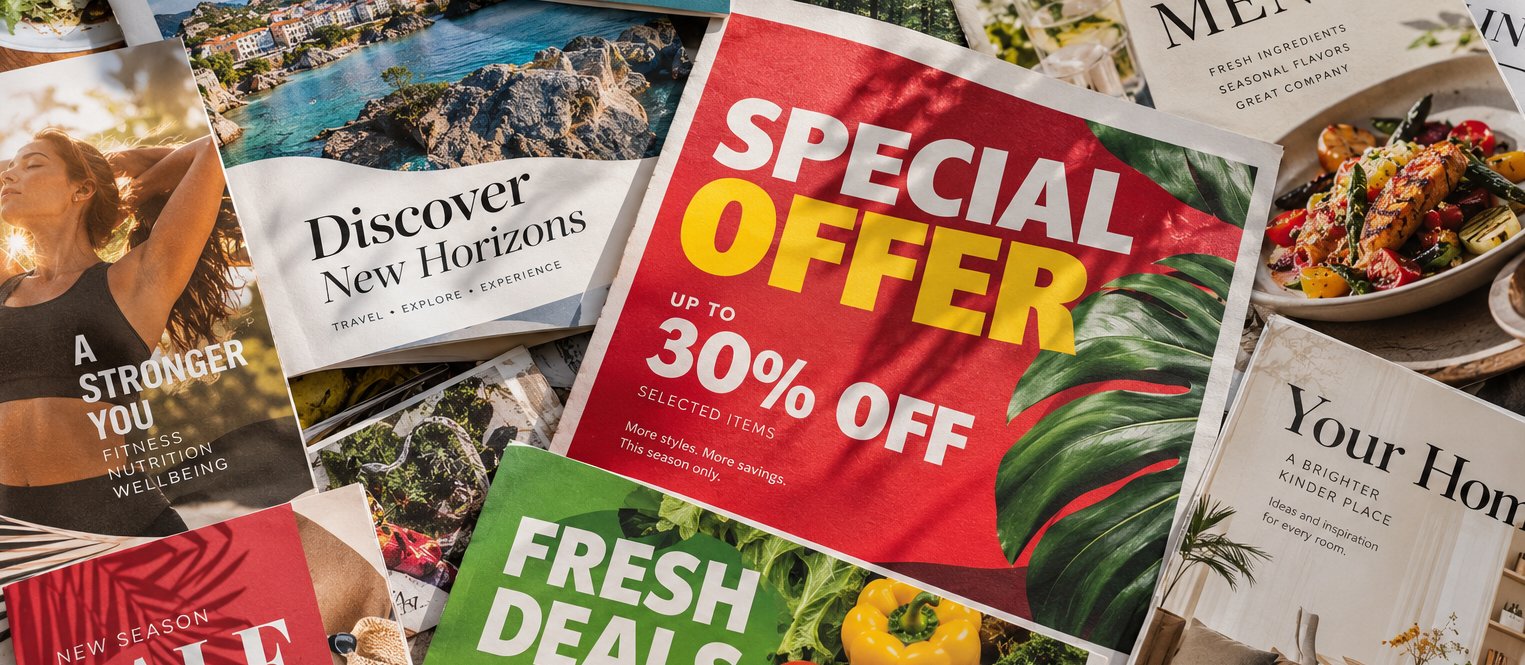
Colorful screens, digital ads placed in unexpected spots, the product provider just a click away, bright, loud images that constantly interrupt the flow of reading… as a result, print media - with its welcome contrast of calm and autonomy - is now coming back into the spotlight. Print is a medium that offers far more than just paper and ink. It’s that “I’ll take a look at this at my own pace” feeling, combined with the active experience of handling a book, a brochure, or a flyer, and the inimitable feel of paper. In this guide, you’ll gain insights into the impact of print marketing, how to analyze target audiences, and how digital and print media ideally complement each other.
Learn more here about how select papers can enhance your brand image and how creative use of print media can help you connect with your target audience. Print has the unique ability to engage the senses, which is why leading marketing experts continue to rely on the power of print. Be sure to explore our extensive portfolio of premium print media, featuring a wide range of finishing options, folding styles, high-quality papers, formats, and sizes.
What is Print Marketing?
Print marketing encompasses all printed advertising materials, primarily those printed on paper. Typical examples include flyers, brochures, magazines, catalogs, and mailings of all kinds. However, other materials used for printing include plastic and textiles. Print media is an important component when combined with a digital brand presence. In contrast, print materials offer an excellent opportunity to establish a longer-lasting connection with your target audience.
"Even in the digital age, 56% of consumers still consider print marketing a trustworthy marketing tool." - MarketingProfs
Why Print Marketing Still Works
In the age of fake news and spam emails, print marketing is regaining importance. This is where the phrase “black on white” (derived from Goethe’s *Faust*) comes into play; it describes something verifiable and reliable. Print materials convey this sense of reliability and engage the reader more deeply, as people tend to spend more time with these media. A study by the Data & Marketing Association clearly shows that direct mail generates a higher response rate than email campaigns. Regardless of concerns about phishing emails circulating online, direct mail still offers a tangibly richer experience, greater impact, and higher memorability.
Print marketing is trustworthy; the reader has it in black and white. A survey by MarketingSherpa confirms that consumers still trust print ads more than online ads when making purchasing decisions. This is a huge, exploitable advantage for your brand’s credibility. Unlike fleeting digital ads, print media such as brochures, catalogs, and flyers offer a longer - and thus more effective - exposure time with your target audience and ensure lasting visibility.
The power of print media lies in the sensory experience it provides. It creates focused reading experiences that leave a lasting impression and strengthen the connection with your target audience. At the same time, print media effectively cuts through the constant digital noise, making it a key component of a comprehensive marketing strategy.
According to a study by the Data & Marketing Association, an email campaign has an average response rate of 1%, while direct mail achieves a response rate of up to 9% for in-house lists and 5% for prospect lists.
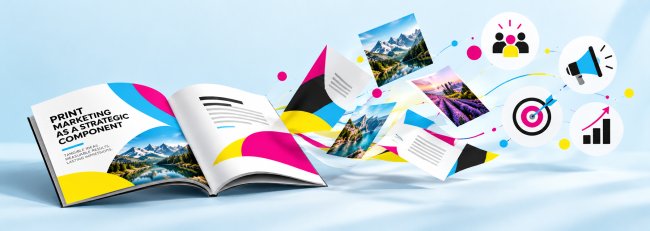
Print Marketing - How Does It Work?
As with any strategy, the question here is, “Where do I start?” Here are some suggestions for getting started with a strategic approach to successful print marketing:
1. Define your target audience
Who is your advertising message aimed at? Segment this group by gender, location, age, interests, and income level. This insight will shape the tone, content, design, and overall look and feel of your print materials. Put yourself in your target audience’s shoes. What are their needs, problems, or preferences? Once you understand how you can be the solution provider for your customers - either through your product or a service - use that to develop your core message and, ideally, your USP.
2. Greater Impact Through Target-Audience-Oriented Design
Visual Impact: Print media make an impact primarily through their design and technical execution. Together, these elements should be eye-catching and leave a lasting impression. High-quality images, vibrant colors, and highly legible fonts, combined with textured papers, sophisticated folding techniques, and modern finishing methods, provide the ideal foundation for this.
Clear brand consistency: Make sure your brand or corporate identity - such as your logo, corporate colors, and brand image - is reflected in your design.
Better with professionals: Professional designers bring your ideas to life, are highly creative in their approach to print media, and give your advertising message a look tailored to your target audience.
3. Craft Your Message
Clearly and understandably. Your message should be concise and written in easy-to-understand language. Use easy-to-read fonts and avoid jargon and complex concepts. Play to your strengths. See yourself as a problem-solver. This is the best way to reach your target audience and encourage them to keep reading. The goal is to get in touch. Encourage your readers to reach out (CTA), for example, by providing your business address, a QR code, or your website.
4. Choosing the Right Materials
The right format. Every piece of content and every message requires a format that’s been carefully designed and tailored to the target audience. A catalog with perfect binding is ideal for a detailed product portfolio, while a creative flyer is better suited for an event program. Quality matters. The choice of high-quality papers and the use of additional finishing techniques should not be underestimated. Combined with professional print results, these elements have a positive impact on your brand and strengthen the perception of your product and your company. There is a wide variety of papers that produce different visual effects when it comes to color reproduction and also feel different to the touch. If you’d like to get an overview, order our sample collection today! You’ll receive a complete toolkit for print media, including a paper sample book featuring papers with various coatings and weights.
5. The Right Logistics
Keep your target audience in mind:Research the best methods and distribution channels for reaching your audience. These can include direct mail, but also indirect distribution through trade shows, stores, events, or partner organizations.
Timing is also crucial: not only for the content itself, but also for your target audience’s willingness to read it. Holidays, event dates, and even seasons provide a good guide here; timely distribution can significantly increase the reach and impact of your print media.
Tracking and other contact tools: such as websites, newsletters, or QR codes, can help you determine the effectiveness of your marketing strategy. Use this data to optimize your strategy. At the same time, these tools also help build customer loyalty; a regular newsletter or blog is particularly helpful in this regard.
A Good Example of Print Media Marketing
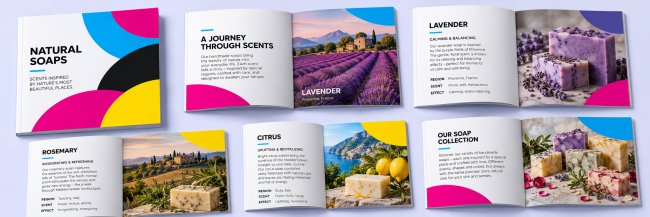
Take, for example, this small soap manufacturer that produces handmade soaps in various scents, shapes, and colors with just three employees. To highlight the diversity of its product line and expand its existing customer base, a small booklet would be ideal - one that describes the differences between the scents, their regional connections, and their aromatic effects. The text, supported by colorful landscape photos that are typical of the scents’ colors and regions - for example, a lavender field in France or a landscape in Tuscany for the rosemary scent - appeals to several senses at once.
These booklets are distributed in the store itself, perhaps even accompanied by a coupon. At the same time, the booklets will be available in nearby cafés, the movie theater lobby, bookstores, and flower shops. Another option would be to include them as an insert in the neighborhood’s monthly events calendar. This way, this small artisanal business becomes a brand that stands out through its emotional philosophy and impact - and no longer relies solely on walk-in customers.
The 7 Most Popular Print Media
Brochures
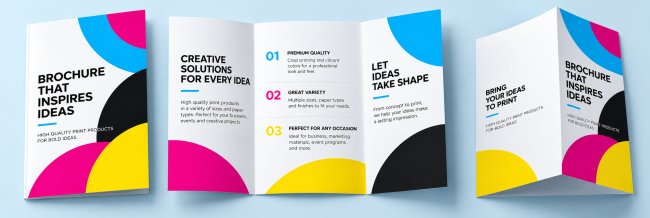
This versatile medium offers a wide range of possibilities for sharing information about your services or products with a large audience. They are produced in various formats and sizes, with varying page counts and different folding techniques (tri-fold or bi-fold). These numerous options form the basis for creative layouts and engaging, even extensive, content. Their applications range from corporate profiles and product presentations to product portfolios, which are distributed at trade shows, via mailings, or directly during sales meetings.
Booklets
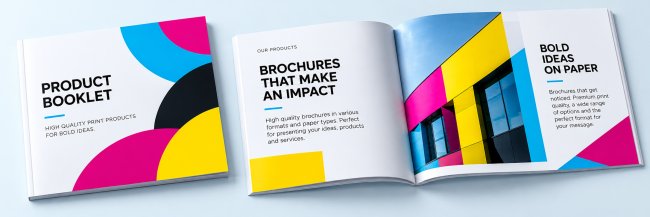
The brochure’s little brother is just as versatile as it is effective, standing out for its convenient small format and reader-friendly design. They are Ideal for initial contact, detailed product information, event programs, and user manuals. A wide range of printing options supports creative design and helps capture your target audience’s attention.
Posters
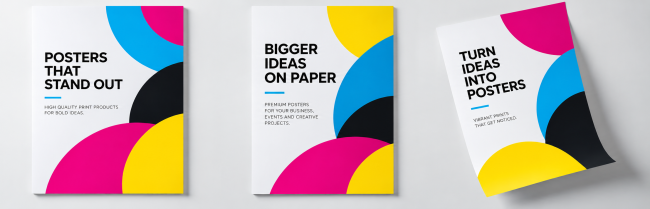
Big. Bigger. Attention. Posters make an impact in public spaces and focus on key details. Whether it’s an event, a product, or a special offer, a well-designed poster captures attention in public waiting areas through vibrant design and a clear message. Learn more about common poster sizes here.
Flyers
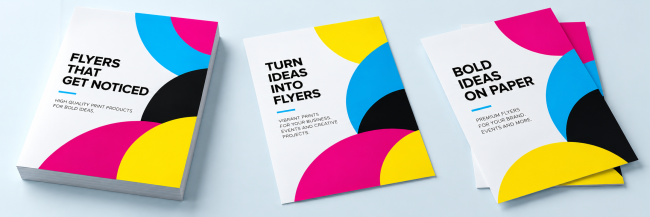
The print medium of choice when it comes to quickly conveying promotional information. Usually printed on one side, they can be produced in large quantities at a low cost. When designed appealingly, flyers are perfect for events, special offers, and grand openings.
Catalogs
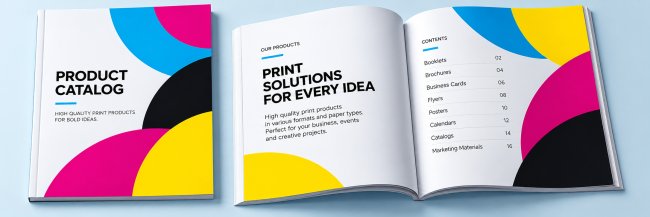
Thanks to their flexible feel. These popular print materials offer an effective way to stay in touch with your customers over the long term. Your entire product range - from bestsellers to the smallest accessories - receives equal attention item by item, making the catalog an important reference tool for your customers that can also serve as the basis for a purchasing decision at a later date. The more professional and appealing the catalog is produced, the longer it will remain in your customers’ hands.
Postcards
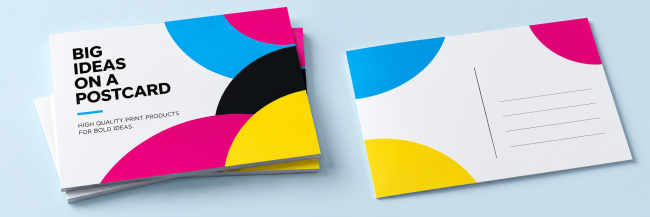
Self-mailers, in particular, are the number one print medium for direct marketing and CRM initiatives. They are cost-effective to produce, efficient at conveying information, and logistically easy to handle. Postcards are ideal for special offers, discount promotions, birthday greetings, or invitations. To learn more about postcards, check this out.
Calendars
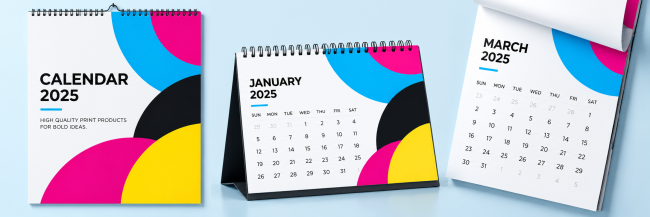
As practical as they are durable. Calendars are the ideal medium for keeping your company or brand in the spotlight of your target audience all year long. The wide variety of designs further highlights the appeal of this medium. Whether portrait or landscape, a practical desk calendar or a decorative wall calendar, a custom three-month calendar, or a smart notebook with a calendar feature - every day of your customer’s life belongs to you. You can find out everything about calendar here in our guide
Print Marketing as a Strategic Component
Whereas print marketing used to be at the heart of all marketing efforts, today print should be viewed as a valuable complement to your digital brand presence.
Social Media
Be sure to also use print media to highlight your digital activities. To do this, include your social media icons on all printed materials, such as brochures and posters, and encourage readers to follow your brand on platforms like Instagram, Facebook, or X. This allows your target audience to stay informed on their own terms through the channels of their choice.
Consistent brand identity across all channels
Consistent design, colors, and fonts are essential for consistently interacting with your target audience - both visually and in the tone of your messaging. At the same time, this consistency enhances brand recognition and strengthens your brand identity.
Use your digital content in print media as well to reach an audience that isn’t as digitally savvy. Compile previously published blog posts into a direct-mail newsletter or turn them into a small booklet. This ensures a consistent customer experience while also saving resources.
Don’t underestimate the power of a call to action
Use your print medium to encourage your readers to connect with you digitally, subscribe to a newsletter, or visit your blog. QR codes, links to your website, and icons for the social media platforms you use are excellent tools for this. Consistent interaction between digital and print creates a cohesive brand experience.
Every medium has its strengths. Identify these for your target audience and promote a strategically seamless integration of your media channels to ensure a consistent brand identity.
Professionalism pays off
Not only should your marketing strategy and its graphic design meet professional standards, but the production of your print materials should as well. To achieve this, we offer state-of-the-art printing technology with high-quality materials and a wide range of printing options that transform your idea into outstanding print media. We stand for vibrant colors, depth of field, and high-quality materials, and we offer you our combined printing expertise for planning and preparing quotes. By consolidating our numerous orders, we generate competitive prices for our customers every day - put us to the test!
Conclusion
Print marketing remains a key component of any brand strategy and will continue to strengthen this role in the future. A well-considered selection of print media and their strategic integration, combined with professional execution, are the cornerstones of a successful and memorable brand campaign. Take advantage of what we have to offer - we’re here to help!
Stay up to date with our latest projects, ideas, and insights into print and design.